
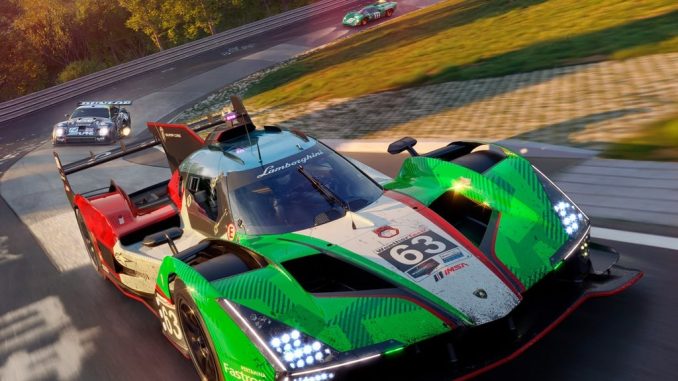
When Project Motor Racing (PMR) launched back in November, it was, to put it bluntly, a bit of a mess. Despite the pedigree of Straight4 Studios, the “mostly negative” reviews on Steam and grumpy comments on various Playstation forums told the story of a sim that had been rushed out of the garage before the wheels were properly bolted on. But here we are in January 2026, and the team has been working absolute overtime. After a string of massive patches, is it finally time to get strapped in and head for the track?
The most immediate improvement, and one that players made some of the most noise about, is the addition of a Radar System. It was a massive oversight at launch, but it’s now been implemented beautifully into the HUD. It’s smooth, accurate, and completely customisable. For those of you who prefer the immersive cockpit view, it’s a total game-changer for close-quarters racing. No more guessing if there’s a Lamborghini Murcielago poking its nose up the inside at Copse in a Max/Lewis kinda way.
The penalty system has also had a proper overhaul. Gone are the days of getting a two-second time penalty for just breathing on a white line. It’s now much more intelligent, giving you warnings and asking you to give up the time yourself rather than just slapping you with a hard penalty. It makes the racing feel less like a legal deposition and more like… well… racing.
The driving physics, already pretty decent, have been further refined. The GT3 and GT4 classes have had a complete tyre behaviour overhaul, fixing the weird floaty feeling some players reported. The PC version has had a massive leap forward in performance thanks to the AMD FSR 2.0 support and a revamped frame rate limiter that now stretches up to 180 FPS for those with the muscle to reach it, but it’s a bit of a mixed bag for us console players. The v1.5.0.5 update caused some nasty frame rate stutters on PS5, so the devs had to roll us back to the previous version while they iron out the kinks. It’s frustrating, but it shows they’re at least paying attention to stability over just “pushing content”, and will almost certainly bring a better end result for the more patient racers around.
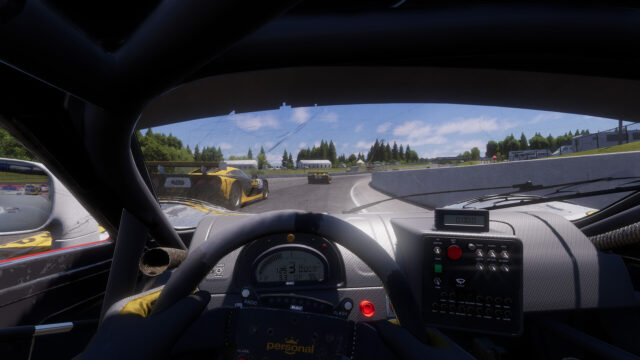
The AI has also definitely been to finishing school, but they still have their moments. They’ve fixed the “LMDh slide” (where top-end prototypes would constantly lock up under braking) and improved their lateral awareness, so they won’t spear you into corners quite as often. However, they still lack that “human” touch; they can be oddly passive one moment and then turn into a homing missile the next, and while these kinds of mistakes can happen (looking at you, Danil Kvyat) it’s all a bit messy at the moment at times. The core visuals also still feel a bit “last-gen” in places, which is a bit of a shame. They’ve improved the tree textures and lighting, but it’s still not going to win any beauty pageants against the likes of Gran Turismo 7.
So, where do we stand several weeks after the game’s clumsy release? If you were put off by the horror stories at launch, then I’d cautiously start to recommend taking a look. The core physics engine is still really good and fun to drive, and the new radar and penalty systems make the actual racing part of the game infinitely more enjoyable. It’s clear the team is rebuilding trust; even after some unfortunate layoffs at the studio, the roadmap for 2026 looks solid with a career mode restructure on the horizon. It’s not the finished article yet, but it’s finally starting to feel like the sim we were promised.
We’re not at No Man’s Sky levels of redemption just yet, but the current game is a massive improvement over the launch version that fixes the essential gripes. We just need to keep fingers crossed for that next PS5 stability patch.