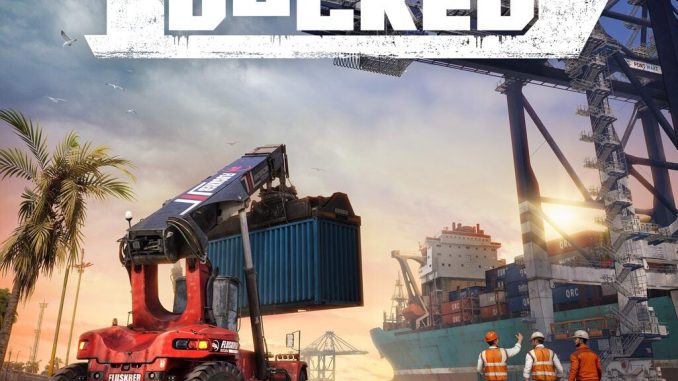
Docked is one of those quietly confident titles that doesn’t shout for your attention but steadily earns it the longer you spend with it. At first glance, it appears to be a deceptively simple game. Reasonably minimalist visuals in a small, contained setting (a dock) and mechanics that feel almost too straightforward, but beneath that is a surprisingly immersive experience.
There is a narrative here, but really all you need to know is ‘you work on a dock’. You find yourself managing a small docking station with a series of checkpoint tasks getting you through the day. Coordinating incoming vessels, allocating resources and making judgment calls that affect the operational effectiveness of the port will take up your time, but whilst this concept is similar to many games, it’s the slow pace that really sets Docked apart.
This isn’t about frantic multitasking or high stakes chaos and instead leans into a slower, more deliberate rhythm that encourages you to think about what you’re doing and make decisions that slowly reveal their impact. For example, you will balance logistics with limited information about what and when ships arrive, and prepare yourself to deal with their varying needs, such as fuel, repairs or unloading. Over time, what felt like a simple decision selection becomes not quite as clear, as each has an impact on the next, particularly as you are making the calls, and then having to carry out the action.
For example, do you prioritise the damaged vessel that might not make it or the one carrying critical supplies for sick people? Do you trust the data you’re given or your gut feeling based on subtle cues? What makes Docked particularly engaging is how it handles consequences. Decisions rarely feel binary or clean. There’s a lingering ambiguity to outcomes told through voiceover narrative that gives weight to even the smallest choices. You might never know if you made the right call, and that uncertainty becomes part of the experience. With these types of ‘job simulator’ games, I often find myself putting on a podcast or low-attention requiring show to watch in the background. I actually (surprisingly) found myself missing things in the game by doing this, which is a testament to how Docked pulls together its gameplay and narrative.
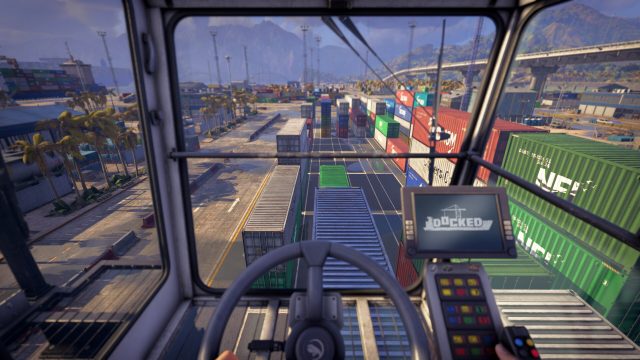
It’s a clever design choice that elevates the game from a simple management into something more reflective and at times quietly tense. Visually Docked embraces minimalism but uses it effectively. The interface is clean and functional with a muted colour palette that reinforces the isolated, almost clinical environment of the docking station.
Information is presented in a cut-back style – everything you need is there. Animations are understated but purposeful, giving just enough feedback to make things feel responsive without breaking immersion. Sound design plays a huge role in building the atmosphere too. The ambient noise of machinery, distant radio chatter and the occasional alert create a soundscape that feels both familiar yet slightly uncomfortable. It’s the kind of audio design that you don’t always notice consciously, but would definitely miss if it weren’t there.
The restrained, slower style of Docked won’t be for everyone. Players looking for fast-paced action or explicit storytelling may find it too quiet, and at times the lack of clear feedback on decisions can feel frustrating. There’s also a degree of repetition in the gameplay loop, especially where the novelty of the mechanics can start to wear thin before the challenge ramps up later on. There is a reward for those who persist, but again, it won’t be for everyone.
Docked is not about spectacle or adrenaline. It’s about responsibility, uncertainty and the quiet pressure of decision-making when there are no perfect answers. By the time you step away from it, you may not remember every specific scenario but you’ll remember how it made you feel slightly uneasy and surprisingly invested in it.
Reviewed on Xbox Series X