After years of the occasional identity crisis, this year‘s entry of WWE 2K refines the formula rather than reinvents it and that turns out to be exactly the right move. It’s content-rich and, most importantly, consistently fun whether you’re a casual fan or someone who’s been hitting virtual finishers since the WWF SmackDown era.
The biggest strength here is that matches feel smoother and more spontaneous than ever, with animations flowing naturally from grapple to counters to signature moves. The timing based reversal system returns, but it’s been tweaked to feel less punishing and more intuitive instead of constant guesswork being required. There’s a clear sense of rhythm rewarding skill without making newer players feel completely outmatched however, there is still some cadence issues. By this, I mean that some moves should be avoided due to slightly longer than you’d like animations, leaving you unnecessarily vulnerable.
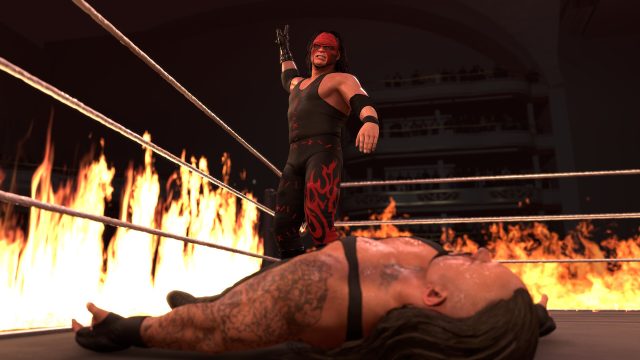
What really stands out this year is how much weight each move seems to carry. Big slams land with impact, strikes feel snappy and finishers genuinely feel like matches should end. There’s a noticeable effort to bring back that sense of drama that wrestling games sometimes lose when they lean too far into simulation. The arcade influence is strong here, where WWE 2K26 tries to strike a strong balance between realism and spectacle.
The roster is, as expected, stacked from current headliners like Roman reigns and Cody Rhodes to lesser known fan favourites and legends. There’s an impressive breadth of talent to choose from; however, it’s a mixed bag in terms of success. There are 400 characters, which is simply insane. However, some are ‘joke’ characters, some are random in-engine built original characters, and some are the same wrestler with multiple skins but counted as alternatives (for example, there are TEN CM Punk variants). Quoting 400 feels a disingenuous.
The character models are among the best for some of the wrestlers. The series has seen improved facial animations and more accurate physics across the board, with some moves bouncing and landing unexpectedly as people fall on ropes or objects. I really love this, but it’s not consistent, sometimes breaking out into random glitches. And whilst some models look amazing, some are diabolically bad. Rhea Ripley is a notable one – arguably one of the biggest stars across the men and women’s rosters, and she looks last-gen. Terrible.
Entrances are always a big part of the presentation, and it is as over-the-top and detailed as you’d hope. Dynamic lighting, camera work and crowd reactions add to the authenticity, and you can select to do good-guy ‘face’ moves or bad guy ‘heel’ moves during the entrance, but annoyingly, these are exactly the same for everyone.
Game modes are aware WWE 2K26 really flexes its muscles. GM Mode continues to evolve and is arguably the standout mode this year. It’s deep, more strategic and offers more control over how you run your brand. Managing contracts, booking rivalries and trying to outdo competing shows becomes surprisingly addictive. There’s a genuine sense of progression as you build your roster and craft storylines that keep ratings climbing. My Rise – the career mode – returns with a more focused narrative structure instead of sprawling disconnected storylines. It offers a tighter, more cohesive journey but suffers from some shocking voice performances. Universe mode remains the sandbox mode for players who want complete control. It hasn’t been radically overhauled, but it benefits from numerous quality-of-life improvements. Rivalries flow more naturally, match cards are easier to manage, and there’s a stronger sense that the mode is reacting to your decisions rather than just generating random events. It’s still the go-to for long-term players who want to craft their own version of WWE history.
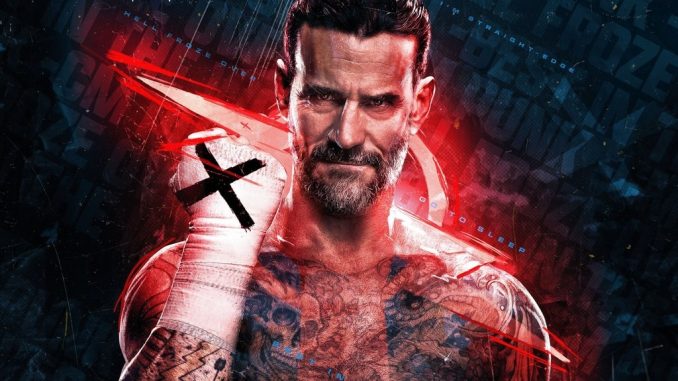
The Showcase mode, which is often hit or miss in previous entries, makes a strong return here with a focus theme that celebrates CM Punk. It’s presented with a mix of live action footage and gameplay that blends more seamlessly than before, although the live footage is an intro, whereas in-game it’s all in-engine now. Objectives are clearer (if a little small to read), transitions are smoother, and it feels less like a checklist and more like an interactive documentary. CM Punk seems to have hand picked the matches that are featured (or so he says), but there are some truly odd inclusions, such as him injecting himself into famous moments in history like the Montreal Screwjob.
Creation suite continues to be one of the most robust in gaming, whether you’re designing wrestlers, arenas, championships or entire shows, the level of customisation is staggering. When I was younger, I would have killed for this level of customisation. Community creations remain a highlight, allowing players to download everything from classic versions of stars to entirely original characters. It’s the kind of feature that extends the game’s lifespan indefinitely.
Commentary has also seen some refinement with awkward repeats mostly removed, and with a slightly better flow, although it still can’t quite keep up with the unpredictability and pace of matches. Different combinations of commentators are on offer, although they’re not always shown at ringside. Minor niggle, but for a wrestling fan, hearing Booker T but seeing Cory Graves is odd.
Where the game stumbles slightly is its ambition to be everything at once with so many modes and systems, there are moments where things feel a bit stretched. Bugs and glitches still pop up reasonably frequently, and in some of the more sprawling modes, the load times are painful. I thought SSDs were supposed to make loading instant?
Online options are ok, serviceable, but nothing spectacular, with some mixed results. If anything, it highlights how button-bashy it can be. For me, I prefer to keep the pace akin to a real wrestling match, so leaning towards the arcade probably is too much for me here.
One of the key shout-out modes is The Island. A sort of sprawling, RPG-lite mode. Honestly, it’s just a bit too fictional for me, with wrestlers dealing with spellcasters and various oddities as they run around with lots of strange-looking characters. I suspect this is akin to COD-Zombies, in that you either love it or hate it. For me, it’s one to avoid, particularly with the pain of constant loading times. Annoyingly, collectables and unlockables are hidden in every mode, so you’re going to get your money’s worth.
Wrapping up the package is the dreaded battle pass. With the most expensive edition hitting close to £150, paying for in-game battle passes for even more characters is a bit rich. I understand the constant ongoing monetisation of live-service games, and even full price games want some income to continue development, but it doesn’t sit quite right. Pacing is off too, so it takes an absolute age to work through the pass.
A good entry then, with some rough patches amongst the brilliance. I feel like a hardcore wrestling development team (or perhaps corporate overlords) would steer away from some of the more gimmick elements and instead focus on the core gameplay, refining it as it’s extremely close to being the best ever. But sadly, second place a world champion does not make.
Reviewed on PS5