
Somewhere around hour three, deep in a contract negotiation with a player I’d never heard of, I realised I hadn’t actually watched a single round of competitive CS2 all evening. That’s either a compliment or a warning label, and Esports Manager 2026 doesn’t seem too fussed which.
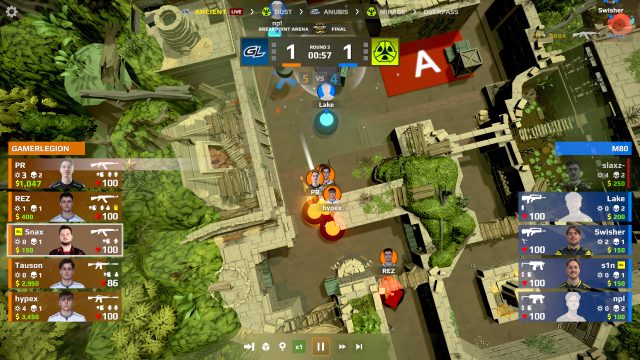
Developed by Neurona Games, this is the Football Manager pitch applied wholesale to esports: you’re taking over an existing organisation or building one from scratch, scouting real players, negotiating contracts, hiring coaches and analysts, and steering live matches yourself through a semi-3D Simulation Mode rather than just watching numbers tick over. There’s no story mode and no game over screen, just the long grind of trying to build something that doesn’t collapse under its own budget. So far, so reasonable.
The scope is genuinely impressive. Real organisations, real pros, a transfer market that actually feels alive, and a backroom staff system where hiring a sports psychologist isn’t a luxury, it’s damage control after a bad losing streak. When it clicks, it clicks hard, the kind of one-more-contract-em-up (it’ll catch on) that eats an evening before you notice.
The problem is getting to that point. The tutorial covers the absolute basics and then leaves you to work out the rest yourself, and the rest is a lot: training plans, morale systems, sponsorship deals, tactical prep, all stacked on top of each other with very little signposting for which of them actually matters most to a fledgling team. I spent my first few hours making decisions with no real sense of whether they were smart or just plausible-sounding, which isn’t the same thing as difficulty done well, it’s just a confidence trick the game hasn’t earned yet.
The map veto screen is an obvious offender. The game clearly wants you to know your squad’s strengths and weaknesses cold, picking and banning based on which map each player actually performs on or which ones you maxed out on in your training half an hour ago, but there’s no percentage breakdown or form indicator anywhere on that screen to tell you. You’re expected to have that knowledge in your head already, built up from matches you’ve watched or training you’ve set up, which is a big ask when the whole appeal of a manager sim is that it should be doing some of that number-crunching for you. A simple win-rate-per-map readout next to each player’s name would have sorted this out in an afternoon’s patch.
The live match commentary is a similar story of good idea, patchy execution. It’s a genuinely nice touch having a duo call the action while you tinker with tactics in Simulation Mode, and it does a decent job of making a screen full of stats feel like an actual match. The trouble is the pool of lines is small enough that you’ll hear the same reactions to the same situations within a handful of games, which undercuts the atmosphere it’s clearly going for. Great idea, needs a much bigger script.
If you already live and breathe the Counter-Strike scene, you’ll likely fill in the gaps the tutorial and the map screen leave behind through sheer familiarity. If you’re coming in cold, be ready for a rough opening stretch before any of it starts making sense, but also be ready for a weird draw that means that despite the flaws and confusions, there’s a very strong “one more match, maybe I’ll win this one” about things that made me keep going back.
Reviewed on PC

Leave a Reply