

There’s a moment about twenty minutes in when your first sea anemones bloom and a little school of clownfish moves in, darting in and out of the fronds like they own the place. No prompt, no achievement popup, just a tiny bit of life arriving in a patch of seabed that was empty five minutes ago. That’s Life Below in a nutshell. It’s a city-builder, technically, but what it’s actually selling you is fifteen minutes of proper calm in a genre that’s usually all spreadsheets and stress.
Megapop’s underwater reef-builder swaps concrete and traffic lights for coral polyps and sea sprites, and the pitch is simple: instead of building a city that exploits its surroundings, you’re restoring an ecosystem that’s already been trashed. You seed coral, attract species, balance food chains, and watch a barren patch of seabed slowly turn into something worth protecting. It sounds like it could be worthy in a bad way, the sort of thing that lectures you between menus, but it never does. The message sits quietly in the background, the same as everything else here.
And what a background it is. This might be the best-sounding management game I’ve played in years. Julie Buchanan’s soundtrack does that rare thing where it’s clearly been composed with real care rather than looped out of a stock library, swelling gently as a new species arrives, dropping to something barely-there while you’re just pottering about placing rocks. I’d have a vinyl pressing of this on the shelf alongside my gaming soundtrack collection the second it existed, it’s that good. Pair that with genuinely gorgeous art, all dappled light and drifting particles, and you’ve got a game that’s less “build the optimal reef” and more “sit in this really nice aquarium for a few hours.” I had it running in the background more than once just to enjoy the vibe while I did something else, which probably isn’t the intended use case but says a lot about how well it’s put together. Megapop have also quietly gone in and tightened up the audio systems since launch, and if anything it sounds even better for it.
The mighty upgrade and research tree gives some freedom to develop your reef in your own way, although initially this is locked behind a preset sequence of unlocks to teach you the ropes, something that stops the potential for overwhelming confusion early on. But it opens up quickly and hints at what’s to come, more and more plants, corals and upgrades to bring in a wider variety of fish, plants and useful improvements. It takes a while to learn what all the different symbols mean, and a few hours in you’ll find your screen swimming in them, but pay close attention to the on-screen prompts and you’ll be figuring it out quickly enough.
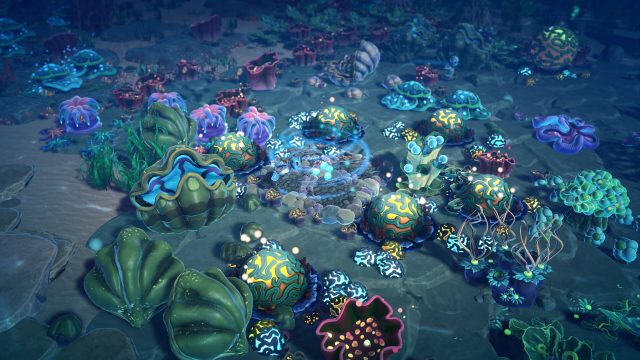
Where it wobbles is the hazard system. Oil slicks, temperature swings, lionfish infestations, and the dreaded garbage patch roll in periodically to test your reef, and in principle that’s fine, a bit of jeopardy stops the whole thing turning into a screensaver. In practice, some of these events hit like they’ve wandered in from a much harder game, and it’s a well-worn complaint among players that an early garbage patch can wipe out a reef before you’ve unlocked anything that can actually deal with it. It’s a proper drifting-along-em-up that occasionally turns into a getting-flattened-by-a-truck-em-up (it’ll catch on). The early hours don’t do a brilliant job of signposting what’s coming either, so you can end up scrambling to counter a threat the game hasn’t really explained yet, which sits awkwardly against how gentle everything else feels. It’s worth saying though that Megapop have been actively patching this since launch, tying hazards to how developed a zone actually is so they shouldn’t blindside you quite as early, and there’s now a proper “easy” Calmer Waters mode that stretches the gaps between events and keeps them at their gentlest. It’s the right instinct for offering the kind of game any would want from this, and it’s the kind of post-launch care that’s easy to take for granted.
None of that sinks it, though. Once you’ve got a few zones established and a rough handle on what each hazard wants from you, Life Below settles into a lovely rhythm, more about nurturing than min-maxing, more about watching things grow than chasing a perfect layout. It’s not going to satisfy anyone after the deep systemic crunch of a proper strategy game, but it doesn’t pretend to. What it does instead, better than almost anything else out there, is make you care about a coral reef.
The slow pace and quietly judgy context won’t be for everyone, but if you want a management game that’s actually about looking after something rather than squeezing it dry and rinsing the population for everything its got, this is a lovely one to sink into.
Reviewed on PC

Leave a Reply